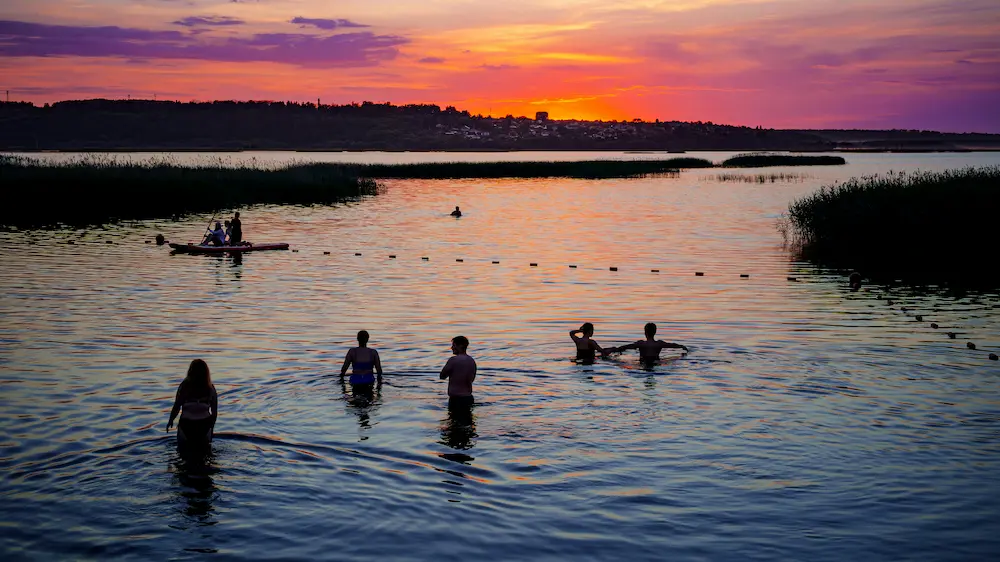
When the temperature climbs into the thirties and the country grinds to a halt, open water starts to look like the perfect escape. A still lake, a slow-moving river, a stretch of coast — all of it feels like an obvious answer to an extreme heatwave. And it can be. But hot weather changes the risks of outdoor swimming in ways that are easy to underestimate, precisely because everything feels so benign.
This article is for open-water swimmers and triathletes training through a UK summer that keeps breaking records. The goal is simple: help you keep enjoying outdoor swimming when the air is dangerously hot, without walking into the hidden hazards that send people into trouble every single heatwave. Most of it comes down to one stubborn fact — warm air does not mean warm water.
Hot air, cold water: the trap
The single most important thing to understand is that an inland lake or a river can stay genuinely cold even during a prolonged heatwave. Air temperature changes fast; large bodies of water change slowly. The surface might feel pleasant, but a metre down it can still be cold enough to trigger cold water shock — the involuntary gasp, the spike in heart rate, and the sudden loss of breath control that the RNLI identify as a leading cause of drowning.
Cold water shock does not care how fit or experienced you are. It is a physiological reflex, and in cold water (anything below roughly 15°C) it can hit within seconds of entry. The cruel part during a heatwave is that overheated swimmers are tempted to jump or dive straight in to cool down quickly — which is exactly the action most likely to provoke the gasp reflex while your face is underwater.
So the first rule of swimming outdoors in extreme heat is almost counter-intuitive: the hotter you feel, the more carefully and slowly you should enter the water.
Enter slowly, every single time
Acclimatising on entry takes under a minute and it changes everything. Walk in gradually. Let the water reach your waist and pause. Splash your neck, chest and the back of your head. Lower your shoulders under and breathe slowly and deliberately until that first urge to gasp settles. Only then start swimming.
This is not a beginner’s habit you grow out of — experienced open-water swimmers and triathletes do it on every entry, including in races. The breath comes back under control within thirty to sixty seconds, and from there your stroke and your decision-making are far more reliable. During a heatwave, when your body is already hot and your heart rate is already elevated, that controlled entry matters even more.
Book a session at The Venue
1-to-1 coaching in Borehamwood for club swimmers, triathletes and adult improvers. £70 an hour, or £85 for a first session built around a stroke assessment. Pick a time that suits and book online — your card is authorised, not charged, until the session is confirmed.
See available times →Not sure what your swimmer needs? Tell us about them and we will say honestly what would help.
Heat that follows you into the water
A heatwave stacks a second set of risks on top of the cold-water ones, and they pull in opposite directions. Heat exhaustion and heatstroke build up before and after the swim: on the walk to the water in full sun, standing around in a wetsuit, driving home dehydrated. The NHS warn that heat exhaustion can tip into heatstroke — a medical emergency — and the early signs are easy to brush off as ordinary tiredness: headache, dizziness, cramp, feeling sick, and heavy sweating that then stops.
For swimmers the dangerous combination is a hot, dehydrated body asked to perform in cold water. Dehydration thickens the blood and raises heart rate; cold water constricts blood vessels and raises it again. If you arrive at the lake already depleted from a hot day, you are not starting from neutral. Drink steadily through the day, not just at the water’s edge, and treat a swim during the hottest hours (roughly 11am to 3pm) as the wrong call rather than a brave one. Early morning is cooler, calmer, usually quieter, and far safer.
A wetsuit is its own heat trap. It is brilliant for buoyancy and warmth in cold water, but standing around in one in 32°C air will cook you. Suit up at the last sensible moment, get in the water reasonably promptly, and unzip the moment you finish.
Where you swim matters more in a heatwave
Hot, still weather changes the water itself, not just your body. Warm surface temperatures and low rainfall encourage blue-green algae blooms in lakes and reservoirs, which can be toxic to swimmers and dogs. Stagnant, low rivers concentrate pollution. After the occasional heatwave thunderstorm, combined sewer overflows can spill into the very rivers that look most tempting the next morning.
The practical guidance from the RLSS and the Outdoor Swimming Society holds up well here: swim at recognised, lifeguarded or established open-water venues rather than improvising at an unknown spot. Check for algae warning signs, avoid water that looks like pea soup or has a visible scum, and never swim alone. A managed open-water venue also solves the two biggest heatwave problems at once — supervision, and a controlled entry point where you are not jumping blind into cold, deep water.
Training sensibly through the heat
For triathletes mid-season, a heatwave is awkward: you still have a programme to hit. The answer is to adjust, not abandon. Shift the hard open-water sessions to early morning. Keep the volume but drop the intensity on the hottest days — your heart rate will run high for a given effort, so going by feel beats chasing pace. Use the heat as a chance to practise calm, deliberate entries and steady sighting rather than flat-out efforts.
This is also a sensible moment to do some of your skill work in the pool instead, where the temperature and the conditions are controlled. Bilateral breathing, sighting drills and pacing all transfer straight to open water, and you can build them without exposure to cold water shock or heat stress. When the heatwave breaks, you carry that skill back outside with you.
If you are newer to open water, a heatwave is genuinely not the time to teach yourself alone. Swimming at a lifeguarded venue or with a supervised group means someone is watching your entry, your breathing and your decisions — which is exactly where things go wrong fastest in extreme conditions.
The short version
Outdoor swimming in an extreme heatwave is one of the best things about a UK summer, and it is perfectly safe when you respect what is actually happening. The air is hot but the water is not; your body is overheated but the lake will still shock it; the surface looks inviting but it may be holding algae or hiding cold, deep water below.
Enter slowly every time, swim early, stay hydrated, pick a managed venue, and never go in alone. Treat the heat as a reason to be more deliberate, not less. If you would like a coach to build your open-water skills — breathing, sighting and pacing, drilled in the pool first — our open-water swim coaching and 1-to-1 coaching across Hertfordshire and North London are built to make hot-weather swimming something you enjoy rather than something that catches you out.